Showing posts with label Lawrence. Show all posts

Thursday, June 5, 2008

er... Scribe List

What Am I even doing this for? There's no more scribing! XD

Quote of the Cycle ;

"There's no such thing in the world as absolute reality. Most of what they call real is actually fiction. What you think you see is only as real as your brain tells you it is."


Stay Phi everyone,

Rence ~ Out

... and I wonder, if you know... what it means, to find your dreams come true...

Wednesday, June 4, 2008

Scribe List

Cycle 6

Francis
Joyce
Eleven
benofschool
roxanne

JamieNeRd123C
zeph
Richard
Hi I'm Justus

nelsa
Rence
kristina
Paul

Quote of the Cycle ;

"There's no such thing in the world as absolute reality. Most of what they call real is actually fiction. What you think you see is only as real as your brain tells you it is."


I don't know about you guys, but honestly, I'm scared of the exam.

Stay Phi everyone,

Rence ~ Out

Tuesday, June 3, 2008

Scribe List

Cycle 6

Francis
Joyce
Eleven
benofschool
roxanne

JamieNeRd123C
zeph
Richard
Hi I'm Justus

nelsa
Rence
kristina
Paul

Quote of the Cycle ;

"There's no such thing in the world as absolute reality. Most of what they call real is actually fiction. What you think you see is only as real as your brain tells you it is."

And remember to watch...
... it's epic

Stay Phi everyone,

Rence ~ Out

Monday, June 2, 2008

Scribe List

Cycle 5

Francis
Joyce
Eleven
benofschool
roxanne

JamieNeRd123C
zeph
AnhThi
Richard
Hi I'm Justus

nelsa
Rence
kristina
Paul

Quote of the Cycle ;

"We say we love flowers, yet we pluck them. We say we love trees, yet we cut them down. And people still wonder why some are afraid when told they are loved."


Stay Phi everyone,

Rence ~ Out


Thursday, May 29, 2008

Scribe List

Cycle 5

Francis
Joyce
Eleven
benofschool
roxanne

JamieNeRd123C
zeph
AnhThi
Richard
Hi I'm Justus

nelsa
Rence
kristina
Paul

Quote of the Cycle ;

"We say we love flowers, yet we pluck them. We say we love trees, yet we cut them down. And people still wonder why some are afraid when told they are loved."

Reminder: Roxanne, Francis and Elven - Your D.E.V. Project is due FRIDAY, yeah that's right, FRIDAY by midnight.

AND!

If you haven't already, just give Mr.K a quick email to have him add you to the D.E.V. Blog. Do it now! 'Cause I know you want to.

On a side note: That dot on the Visitor map is getting awfully large. Makes us seem like a big target =( Lol, just kidding.


Stay Phi everyone,

Rence ~ Out

Scribe List

Cycle 5

Francis
Joyce
Eleven
benofschool
roxanne

JamieNeRd123C
zeph
AnhThi
Richard
Hi I'm Justus

nelsa
Rence
kristina
Paul

Quote of the Cycle ;

"We say we love flowers, yet we pluck them. We say we love trees, yet we cut them down. And people still wonder why some are afraid when told they are loved."

AND NO, Unicorns aren't real. :) Sorry to burst your bubble guys. Lol.


Stay Phi everyone,

Rence ~ Out

Tuesday, May 27, 2008

Costly Test

So yeah, the reason why I'm up so late was because I just got back from the Glow in the Dark concert... and I've completely lost my voice. Anyways, I found this really cool story so I thought I'd share it and hope that you get a laugh out of it too.


A professor was giving a big test one day to his students.

He handed out all of the tests and went back to his desk to wait. Once the test was over the students all handed the tests back in. The professor noticed that one of the students had attached a$100 bill to his test with a note saying, "A dollar per point."

The next class the professor handed the tests back out.


This student got his test back and $64 change.

Wednesday, May 21, 2008

Conics Bob

Ahhh Conics. Too bad Mr.K didn't show us any more of his samurai skills with this metre-stick-katana.

To the point. I will admit, like every section in this course, I had troubles in one way or another. The origami was cool, as it went with the whole Japanese theme Mr.K was trying to capture (TOYOTA-HONDA-MITSUBISHI-MAZDA-YOKOHAMA-SONY-etc...) Like every other type of graphing, I don't like to graph. Granted it does give me a better look at whats happening and I can tell what's happening, but like everything else in life, just because you know how to do it doesn't mean you're supposed to like it. Like graphing.

I liked how parabolas, circles, ellipses and hyperbolas had their distinct way to tell each other apart without having to think hard but rather just look at what's switching to make it graph that way. But, that's probably about it. The math was pretty simple once I took the time to sit down and study it all, like I am tonight.

I didn't like word problems however, how they make it seem like it's supposed to be something it's not, but yeah, I know, I'm just over complicating it.

I will be deep in study for a while because well, exams are closing in surprisingly fast. OH and don't forget about your DEV projects.

Rence ~ Out

Tuesday, May 20, 2008

Conic Workshops and Pre-Tests

This will be basic and short as I don't really have any time to spare.

Our first class consisted of
  • A workshop on Conic word problems

Our Second class consisted of a Pre-Test.

Our first class was pretty straight forward and Mr. K just put us in groups to solve a number of word problems. When we started on the first one. Some of us had an answer, but we didn't put it up, whether it was right or wrong. Mr. K pointed out that we were afraid to get out our Ideas because most of us, if not, all, are afraid of getting the wrong answer, and we'll be "bad people". He also pointed out that we shouldn't be scared in getting our idea's out, because it wouldn't make us "bad people" and if everyone was always right, we wouldn't need to attend the class. Because how else do you learn? By making mistakes. So take that into consideration.

Anyways, we worked on a few questions but we sometimes made it a little complicated by looking at it wrong. Remember Mr.K's block of wood. Look at it in different perspectives. I won't really go into detail, and you can more or less pick your parts and pieces from the slides.

In the afternoon class, we had a Pre-Test, and again, the answers are posted up on the slides. Our test is on THURSDAY. Do recall that Mark has kindly posted Links for us to brush up on our Conics. I know I'm gonna hit those links up later, so you should too :) Mr. K also has practice exam's and exam information in his LINKS section (because you know, the exam is in a bout two weeks roughly) Sorry this is short and not into detail but I have to go. Kthxbye!

Oh right.. Scribe.. The next scribe shall be... ROXANNE :)

Monday, May 19, 2008

Scribe List

Cycle 5

Francis
Joyce
Eleven
benofschool
roxanne

JamieNeRd123C
zeph
AnhThi
Richard
Hi I'm Justus

nelsa
Rence
kristina
Paul

* Note; Rence is crossed off as he is scribe today [May 20th].

Quote of the Cycle ;

"We say we love flowers, yet we pluck them. We say we love trees, yet we cut them down. And people still wonder why some are afraid when told they are loved."


Stay Phi everyone,

Rence ~ Out

Tuesday, May 13, 2008

Scribe List - Cycle 5 -

Cycle 5

Francis
Joyce
Eleven
benofschool
roxanne

JamieNeRd123C
zeph
AnhThi
Richard
Hi I'm Justus

nelsa
Rence
kristina
Paul

* Note; Richard's crossed off as he scribe today [May 13th].

Quote of the Cycle ;

"We say we love flowers, yet we pluck them. We say we love trees, yet we cut them down. And people still wonder why some are afraid when told they are loved."


Stay Phi everyone,

Rence ~ Out

Wednesday, May 7, 2008

ComBOBinatorics

Combinatorics. I found this unit quite easy at the beginning. It was one of the units I felt very comfortable doing, 'cause more or less, it's just combinations and permutations. After that, it got a bit harder, with the whole poker hands and what not.

Basically you just had to focus on what was being said.

The Pick and Choose was easy enough to grasp, but then after that you throw in restrictions and all that which created a bit of a turmoil for some people, including me at times. At first, the table question stumped us all, and then we understood it after we got the whole reference part down because you know, a circle doesn't end =P

Then after that, bracelets threw us off because we thought "oh, it's just like the table." But it wasn't. Bummer huh.

I mostly had trouble with the poker hands, with all the choosing and restrictions =/

Overall, this was a good unit for me. Nothing tricky, I just have to observe it closely. Look for the clues, and you'll know what to do more or less.

Monday, May 5, 2008

The Binomial Theorum, Fibonacci, Vitruvian Dan

Today, Mr.K continued on his journey to show us how The Good Lord made the world and his attempt to blow our minds... I'll tell you how that went in a bit BUT, strap yourselves in because I tried to take down notes on basically everything he went through and said so, needless to say, this one's gonna be long.

To easily locate what you are looking for, either press Ctrl + F or Apple + F, and insert one of the subjects to quickly jump to what you'd like to review.

First Class consists of ;
  • Vitruvian Man
  • Pascal / Shijie Triangle Review
  • The Hockey Stick Pattern
  • Revealing The Fibonacci Pattern
  • Phi - The Golden Ratio
  • Binomial Solving

Second Class consists of;

  • Workshop Groups
  • Binomial Solving - Continued
  • Using a System of Equations

The First Class

The Vitruvian Man
First he presented to us 'The Vitruvian Man', which was originally a portrait, drawing, painting... uh.. artistic depiction of man, drawn by none other than Leonardo Da Vinci...
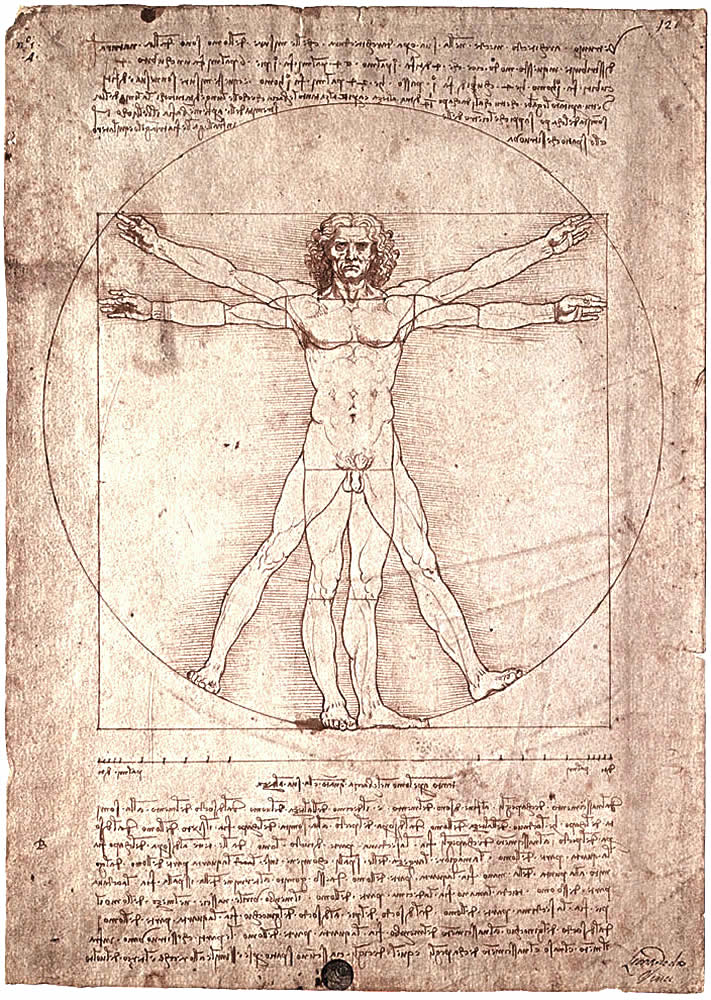


ANYWAYS, The Vitruvian man is the most accurate depiction of man, with everything being of most accurate measurements. Fingers, arm length, leg length etc. I stated that if no mutations had occurred in a human body, A person's Wing Span (Length from arm to the other) is equal to that person's height. And so, Mr. K measured me. Turns out, with my hair, and shoes, I seemed to be longer than my wing span. Subtract my hair and shoes, it would be just about right. He then talked about the symmetry of people and that if someones face or body was more symmetrical, the closer they would be to being "beautiful".


Pascal / Shijie Triangle Review
Concluding that, we reviewed 'Pascals' Triangle. Notice the quotations there. We first went over the patterns. Such as...

- when the binomial is expanded, A's exponent is decreasing, and B's exponent is increasing.
- the degree of any term, (a, ab, b) is equal to the term of the binomial.
ex.) (a + b)² = a²+ 2ab + b² <-- the exponent on the A and B terms of AB have a sum of two.


The yellow line is simply the counting numbers.
The green line in pascal's triangle are the triangular numbers.


- Triangular numbers are the sum of the counting numbers. 1 = 1, 2 = 3, 3 = 6 ...
- Justus, [in the previous class] found the tetrahedral numbers. (Follow the link to get a better definition etc)


- The powers of Two are embedded in each row. Example; 2° = 1 (Zeroth Row) 2¹ = 2 (First row) 1 + 1 = 2 ... and so on.
- The powers of Eleven [Word up to Elven] are also embedded in each row.


Now getting on with the Regularly Scheduled programming...


The Hockey Stick Pattern
He showed us new patterns within Zhu Shijie's Triangle. Such as the 'Hockey Stick' Pattern... How Canadian :) Basically, the hockey stick pattern is starting from any side (starting with one), go down diagonally, then cut back in the direction you came in and voila, the sum of those numbers are equal to the last number you cut into. Coincidence? I don't think so.


What the H, E, quadruple hockey sticks!?!?

Revealing The Fibonacci Pattern
Next, he showed us how to find the Fibonacci numbers within the triangle. In this slide, it is found by adding the numbers in a diagonal orientation.

He showed us that the 'Nacci sequence is found all around us, like in tree's and well, plants. For example. They're found in Pine Cones, Flowers, and their leaves. Bee's also respect the 'Nacci numbers when reproducing, as the male can only have one parent, and the female two, and from there you can pretty much depict how that goes down.


Phi - The Golden Ratio
He then started to divide each Fibonacci number by the number before that one. We found that the resulting number seemed to be reaching a certain number. He then introduced to us... Phi! "PHI is One H of a lot COOLER than Pi!!!" Get it? GET IT?! *crickets* Ok cool

So we have this here. If you want to look into it more, go to http://goldennumber.net/. I believe it's the 'Phinest' Source on Phi, or the Golden Sequence, or Golden Ratio, or ... You get where I'm goin'. So he did some stuff, like explaining that a 4 x 6 picture is better because it approaches Phi more than the 5 x 7 photographs. Apparently if you take pictures like the way he has set up in the slide above (at the black spots), you'll get a better looking, more attractive picture, if your object is concentrated at one of those points. This was where he started to tell us how to get 10 % more on the things we hand in... by making it approach Phi. So then he did all this stuff to 'Build' a golden ratio. So you...
  • Take a square, cut it in half
  • Make a semi-diagonal, in which you get a Pythagorean triangle...
  • and then I got lost after that.

He then went to the point where the golden ratio is 1 + √5 / 2 = 0. He then went on to explain Phi is everywhere, in the proportions of your body, (elbow to finger, wingspan, feet, height etc.) Everything is divided Long by Small to get Phi. So basically to get 10% of everything you hand in, hand it in so that it respect's Phi, and it'll look that more attractive... I think.

Basically, the more symmetrical you are, the closer you are to 'beautiful'. This is why a famous building in Athens (My bad, I couldn't recall what the building was called), is crumbling, but still looks appealing to people.

INTERMISSION


This Scribe post is sponsored by AVP
[No not Alien vs. Predator]
Binomial Solving
He went on an then introduced this...

So then we all screamed in terror (At least I did) as if Mr.K adopted the Dark Side due to this very long expression. But really it's the same thing we've been doing all along. nC2 = N! / (N-2)! 2! = N(N-1)/2! Which we find is one of the expressions within the algebraic expansion. So don't run away.

Remember, The number of terms is one more than the degree of the binomial. Mr. K then showed us the patterns.
  1. The coefficient of the 'ith' term is nC(i-1) ex.) for the 5th term, you'd choose 4
  2. The exponent on the "a-term" is given by: [n - (i - 1)]
  3. The exponent on the "b-term" is given by: (i - 1)
  4. The relation holds for each term in the expansion [exp a] + [exp b] = n
  5. The number of terms in any binomial expansion is: ( N + 1 )

Remember, There's always one more term than the degree of the binomial.


THE SECOND CLASS

Then we started to do some Binomial Solving. Mr.K asked us to find the 4th term in the expansion of (2 + x) ^7

To make this easier, we changed it into the (a + b) format we were using earlier. So we let a = 2 and b = x. We then have it as (a + b) ^7

So to find the 4th term we set it up as so;

t4 = 7C3 a^4 b^3

B's exponent is 3 because of (i - 1), 4 -1 in this case.

A's exponent is 4 because of [n - (i - 1) ], [7 - 3] in this case.

So then we came down with 7! / 4!3! (2)^4(x) ³ <-- We put back in the variables.

Then we came down with 35 (16) (x³) = 560x³

We then did about two more of them, but what I found really cool about how he did one of them is how he multiplied 56 an -8.

Basically he broke up 56 into 50 and 6. He then showed the concept of basically doubling those three times (2 cubed).

So first he doubled 50 and 6 --> 50 * 2 = 100 6 * 2 = 12
... then he doubled it again --> 100 * 2 = 200 12 * 2 = 24
... then he doubled it again --> 200 * 2 = 400 24 * 2 = 48
then he added them together --> 400 + 48 = 448.
And because the 8 was negative... --> -448.


So try it on your calculators... 56 * -8 = ... - 448!


Yeah I know, crazy.


Ok, lets try to wrap this up quick. I'm just showing this slide, as it's many student's mistakes to multiply the -1 by 3, but really, you're just cubing it... which still makes it -1 :)

Here, we discussed finding a certain term within an expansion.

First we did it a long and tedious way ( I didn't put up the slide for it), and once we found the pattern, which is the exponent changing by the same difference, we can then find the term we are looking for. But Mr. K showed us a more elegant way.

First, we wrote out the way we'd choose a number from an amount. And we'd use dummy variables so that we can just get the structure up.

So we set it up like ; qCp a^p b^q

This is where our *Remember* segment comes in.

REMEMBER, the exponent's sum must match the degree of the Binomial! So take a quick look above in the slide and we notice the exponent of the Binomial is 9, therefore, p + q MUST, and I mean MUST equal 9. Now let's put back in the variables so we can solve this little sucker.

(x^3) ^p (-x^-1) ^q So since we put back in the variables, the exponents now are 3p and -q. So then because we're looking for x^7, we set it up like;

3p - q = 7. well at least it should equal 7, because that's how we built it.

Then create a system of equations. p+q + 3p - q = 9+7 --> 4p = 16. Therefore, p = 4 and since p = 4, and the exponents MUST equal 9...

9 - 4 = 5. Therefore q = 5.

Now we can find that term.

9C5 (x^3)(-x^-1)^5 = x^7

= 126x^7

Class, this concludes today's lesson and work.

REMEMBER!

The sum of the exponents on any term MUST equal the degree of the Binomial!

Don't mistake exponents and multiply the coefficient. It must be raised to that exponent.

Don't forget about the Zeroth term!

And finally... A LOGARITHM IS AN EXPONENT! ... Just in case you forgot.

A side note;

Watch Iron Man. It's Dope. ... or should I say Phi? Oh yeah before I forget. The Next Scribe is ZEPH.


Now then, I gotta get some sleep and stay PHI! 8)


Rence ~ Out

Scribe List

It's been a LONG WHILE since Mr.K updated the 'Hit-List' so I thought I'd be a good samaritan and just post it up :)


Cycle 4

Francis
Joyce
Eleven
benofschool
roxanne

JamieNeRd123C
zeph
AnhThi
Richard
Hi I'm Justus

nelsa
Rence
kristina
Paul


* Note; Zeph's crossed off as he is today's scribe.

Stay Phi everyone,

JabbaRence ~ Out

Thursday, April 24, 2008

BOB on LOGS

So, this was a fair unit. I had my ups and downs... Like a sine function but yeah, overall this was pretty easy after you grasp the concept that a Logarithm is an exponent.. Even though you're gonna forget that. The whole Base, Arguement/Power equals an exponent was pretty easy. Even when he threw in the X's and what not, It was still basic quadratic equations. (Oh and don't forget, -b +/- squareroot bsquared - 4ac all over 2a :D (Trust me, it's helpful). Then we found what is called.. A natural logarithm. Ln (pronounced Ellen..). Apparently it's easier BECAUSE it has ONE LESS LETTER. Oh yey.

Then the graphing. It was... okay. Wasnt' the greatest experience in the world, but I'm still studying up on it. The whole fact that it gets infinitely close to 0 is well. Unreal. Concave up (remember it's like a sharp, curved, turn... to say the least.) or down. I liked the simplicity of the unit.. until it all came crashing down with this crazy stuff. We also learned about compound interest :D. Now we can all beat the bankers! xD A = Ao(model) t, which was also another thing we learned, and it was all geezy, until we started getting the wrong answers =/ But this was a real good unit. I'll definitely study hard for this one. >:D

Rence ~ Out

Thursday, April 10, 2008

Math in the Real World... Litterally

This is my flickr Picture, which is a trigonometric function within a pile of Lettuce Rolls. I was just grocery shoppin' with my mom, and happened to come along this lettuce in the produce section. A place you think you'd never find math, except weighing and prices. Well then, "Let us" take a look at the "Lettuce". Enjoy :D

http://flickr.com/photos/24536017@N02/2396929835/

Thursday, March 27, 2008

The Bourne.. ~ er ~ BOB Identity

Rence here reporting his bob a week early before the test takes place but HEY! Let's get this out of the way. I found this to be quite an interesting unit. The whole other identities of trig functions and all that. At first, I was a bit confused but later it all unravelled with the collories, difference of square identities and proving identities.

At times I found proving identities hard because well, like a normal case, you'd have to collect evidence to prove the identitie is real. Very rarely is the identity false because you'd algebraically massage it until it all falls into place like a puzzle, but a sudoku puzzle to be exact, because you're not always going to make a sudoku puzzle perfect from the start. You play around with it here and there. I found playing around with the identities a bit tedious, but it had to be done. It's just that I don't notice certain identities at first that would lead to the final answer.

This was a good unit in my say, theres were just a few frustration points where I had to get over the hump so yeah. I don't and do look forward to the test at the same time. So yeah.

~Rence OUT!

JabbaMatheez - The Touch Up.

APPARENTLY I got 1000 marks for finding 'X' SO, I guess I don't have to come to class anymore. =P
We did a little touch up class before we headed on to the next unit. On top of that, we conversed about various things, like when we should have the math test, (Some crazy guy suggested we do the test THEN the pre-test. What a guy huh?), DJ K's baby, Justus' remix to "Apologize" and many other random things... that unfortunately had nothing to do with math. BUT Hupsha, hupsha, quick like a bunny, we went off to work.

If you look at the second slide, you'll see we did a simple warm up and proved some identities. REMEMBER! When the question asks that you PROVE and I mean PROVE, create your GREAT WALL OF JABBA! Which is to say YOU CANNOT CROSS THAT LINE! But when it says SOLVE then you may cross that line and do whatever you wish. That first one on the left side of the slide was done none other than ELVEN. Whom was remarked as... HAWT. So anyways, he simply changed 1 + tan² x into seceant, which is 1/cos² x. He then multiplied the sin²x which would end up becoming tan² x. And so both sides are the same.

On the right side, ben started off by changing seceant and coseceant into their 1 / sine and 1 / cosine bretheren. On the other side of the Great Wall of Jabba, he changed it to 1 / cos² xsin²x, so that when he finished the left side they would be identical. QED!

Intermission...


And Now Back to our Regular Programming...

Closed Captioning brought to you by... Rence

This Blog is sponsored by DJ K!!!

Now if you look at the 3rd slide, it says solve so what does that mean class!? That's right! Mr. K's buying us donuts for tomorrows class! LOL I wish but actually it means you can cross the Great Wall of Jabba. And that's exactly what Thi does in this slide, marked in GREEN. He moves over the 1 and divides 2 from both sides to get cos²x = 1/2. He then square rooted it BUT he forgot the + /- sign. Don't forget that, write that down. Because of that, he missed two of the solutions and so his solution was not completely wrong, but incomplete. Props to Thi for going up to the board and doing that, bcause chances are we would've made the same mistake. Except Ben, but hey, Ben's a genius.
Marked down in BLACK, DJ K's got the elegant way of answering the question. So this is how he breaks it down, and no I don't mean by doing flares and what not. I mean how he takes the 2cos² x - 1 and breaks it down to (√2cosx + 1)(√2cosx - 1) = 0.
From that we can derive that cosx = 1/√2 and cosx = -1/√2 but WWWAAAIIITTT! We have to rationalize that! So it by multiplying both the top and bottom by √2 we get cosx = √2/2, -√2/2, and that's how DJ K get's the other two solutions. Ya'll dig or what?

Continuing on to slide 4, we have a similar question, but sine and cos are in the same equation(2cos²x = 2 + sinx)!
Oh No! Like DJ K said, we couldn't probably do it weeks ago and say "DJ K, I'm sorry but I only work with one way equations. Throw in Sine and Cosine, sorry, no can do." And he's right, but us, being smarter than the average bear find that cos²x = 1 - sin²x. So now everything's sin²x. Can we do it? Yes we can!
So then we basically get everything off to one side in this equation (is now 2(1 - sin²x) = 2 + sinx --> 2 - 2sin²x = 2 + sinx *since the 2's cancel* --> 0 = 2sin²x + sinx) we can then factor out sinx (sinx(2sinx + 1)) in which we find that sinx = - 1/2.
Well, we find through that, that the solution is 11π/6 + 2 kπ ; KЄ I and 7π/6 + 2kπ ; KЄ I. On the next slide we practically do the same thing. Different trig functions and numbers is all.

Another intermission

Continuing to our next slide, we continue with our regular scheduled programming.

In this slide we are given sinα = 4/5 and cos β = -5 / 13 where cosα <> 0. So to find those, we know that sinβ and cosα are in quadrant 2 using Pythagoras's theorem & a picture of the unit square like so.

5² - 4² = 3² (25 - 16 = 9 --> √9 = 3) and 13² - 5² = 12 ² (169 - 25 = 144 --> √144 = 12)

It then asks us to find what Tan(α - β) is so we basically combine Sin(α - β) /Cos(α - β)

GREAT! So now we have cosα = -3/5 and sinβ = 12 / 13. So Now we can get Tan(α - β) .

I know it's homework, but I'll post up my answer so that others can compare. Correct me if I'm wrong PLEASE!

Sin(α - β) = SinαCosβ - CosαSinβ. Cos(α - β) = CosαCosβ + SinαSinβ.

Then, set it up like this. SinαCosβ - CosαSinβ/CosαCosβ + SinαSinβ.

Replace them. (4/5)(-5/13) - (-3/5)(12/13) / (-3/5)(-5/13) + (4/5)(12/13) --> (-20/65) - (36/65) / (15/65) + (48/65) --> (-56/65) / (63/65)

*MULTIPLY BY THE RECIPROCAL* (-56/65) * (65/63)

* 65's REDUCE* -56 / 63. So I got an answer of Tan(α - β) = -56 / 63

That's all for today folks! Remember, we start a new unit tomorrow!!

P.S. HEY fellow JabbaMatheez! We still have our PICTURES due after the break so don't forget that while you're all having fun and having adventures on SPRING BREAK '08!

Oh wait, there's still the masking of the next Scribe!

I will pass the Jabba Scribe on to... FRANCIS!!

~Rence OUT!

Thursday, March 13, 2008

Group Second to None

Okay, late I know, but unfortunately our group didn't post in time, So I'll try to do this quick fast.

Anyways, this is our solution.

SLIDE 17:

This equation gives the depth of the water, h meters, at an ocean port at any time, t hours during a certain day

h(t) = 2.5 sin[2pi(t - 1.5)/12.4] + 4.3

A) Explain the significance of each number in the equation


I) 2.5 - This is parameter A, which will determine the amplitude of the function


II) 12.4 is the Period of the function, which is obtained from parameter B - 2pi/12.4

III) 1.5 - This is parameter C, which is the phase shift, in which this function, the graph shifts to the right 1.5 units/hours.

IV)4.3 - This is parameter D, which is the sinusoidal axis, which shifts the sinusoidal axis up 4.3 metres..


B) What is the minimum depth of the water? When does it occur?


Now, We can go backwards and use that point, but since we can use whichever point, we decided to use the next one, which minimum depth, 1.8 metres, occurs at 10.8 hours.


C) Determine the depth of the water at 9:30 am.

So then we just plug it in.

h(9.5) = 2.5sin[2pi(9.5 - 1.5)/12.4] + 4.3
*t is 9.5 because time ~ 9:30 AM ~ is converted to 9.5 because :30 minutes is .5 hours.*

in which we get... 2.323 metres.


D) Determine one time when the water is 4.0 metres deep.

So then we go something like...

4 = 2.5sin[2pi(t-1.5)/12.4] + 4.3


First we subtracted 4.3 from both sides like so.

-0.3 = 2.5sin[2pi(t-1.5)/12.4]


Then we added the phase shift to both sides to get...

1.2 = 2.5 sin[2pi(t)/12.4]


Then we divided parameter A out.

0.48 = sin[2pi(t)/12.4)


We then divided 2pi/12.4 in which .48 would be multiplied by the reciprocal of 2pi/12.4, and moved sine to the other side to change it to ARCSine to isolate t.

ARCSine(0.9473) = t

Which would equal to --> 1.2447 hours.


To make it efficient, we'll multiply the .2247 by 60 so


Depth of water of 4 metres occurs at 1:13:48 am.


Again, sorry for posting so late. Original personnel that was to post, did not post. Feel free to comment, as we are supposed to.

Tuesday, March 11, 2008

BOB on Transformations, Function in Disguise

Yet again, bobbing, for the next test that is coming. Wow.

Transformations. I understand the whole graphing sine & cosine, so the whole graphing functions wasn't so hard, until it came to more complicated things like 1 / f(x). A key step to remember when graphing the new function is STRETCHES before TRANSLATIONS. ALSO remember to put f(x) = or y = otherwise it will be treated as an expression and will be marked WRONG. And then you'll fail. Well you won't fail but you'll lose a whole mark. So that was pretty good to remember. The whole DABC thing, I believe I got in the bag. So I'm feeling pretty good. I should study anyway though.

Piece wise functions got me in a bind for a bit. I don't completely understand them yet, but I'll look back at them and stare at them for a good few hours and maybe I'll figure something out. The 1/sine stuff I understand now after finding the patterns because well I mean, like Mr.K says, Math is the science of patterns. Therefore, is math a science... or is math.. Math? Anyways, the Sunrise problem was quite an eye opener, but after Mr. K gave us a push-start, I started to see everything fall into place with the exception of missing little things like adding the -10 to the total, which would mess up out marks so, that's something to look out for.

Overall, this unit was pretty good with the few exceptions of a few things that threw me off course but one we stare at it for a bit, we tend to find our way again, right guys?!