Showing posts with label Combinatorics. Show all posts

Tuesday, May 27, 2008

Combinations of Permutations and Probability and Combinations O_o

Why hello there!
Benofschool here. I never scribed for a while, I was beginning to think that you guys forgot about me =(. Well anyways time for a scribe. Mr.K was later than usual today but he wasn't late for school which was good. Today's class was a workshop. We were broke up into groups like every other workshop class. Unfortunately the slides aren't up. Questions were put up and we were off...

Question 1
We had to find the probability of getting an ace or a diamond from a deck of cards. Fairly simple. Francis went up to answer it. To get the answer we just add the probabilities of getting an Ace and a Diamond and subtract the probability of getting the Ace of Diamonds. We add because it is an "or" question and we subtract that single card because it was counted twice when we calculated the probability of getting an Ace or Diamond. So the answer was 4/13.

Question 2
The second question involved a venn-diagram and venn skills from grade 11 logic in pre-calculus. The question was what is the probability of picking a person who doesn't like Dr. Pepper or the diet version if 7 people liked Dr.Pepper, 11 people liked the diet version, and 3 people liked both. So first we have to create a two circle venn-diagram. Rule is start with the inside and work outwards. So we put in the middle which means that 3 people prefer both drinks. Then lets work with on side. But remember from grade 11 we have to subtract the number of objects in the center from the separate values. If we look at the first question, we didn't count the Ace of Diamonds because the probability of getting an Ace or a Diamond is not mutually exclusive as well as the Dr. Pepper situation. If one thing occurs, the other probability can still happen. So that means we have to subtract the number of people that liked both drinks from the separate preferences. We get the sum of those numbers (4 +3+8=15) and subtract from the total number of students in the class (25-15=10). That will be the numerator in the probability and the sample space would be the total number of students. So the answer is 2/5.

Question 3
The 3rd question is about picking dresses. There are 15 dresses: 6 green, 5 blue and 4 yellow dresses. We wanted to know what is the probability of getting exactly 2 green dresses from picking 6. This question involves both combinations and probability. So 6 choose 2 because they are indistinguishable. multiplied by 9 choose 4 for the remainder of the dresses divided by 15 choose 6 which is the ways that we can choose 6 dresses out of 15. So we get an answer of 37.8%.
Question 4
Another combination question. A couple has 4 children that are about to be born. What is the probability of getting at least 2 girls. So what we do is find the probability of getting 2 girls first then 3 girls and finally all girls. Then we just find the sum of those values and we get the answer. The answer is:

That were all of the questions we did in today's class. Remember DEV due dates are arriving in a future now. Check the calendar on the right side bar to check for your due dates. Tomorrow's double will be used as a DEV work day. So bring the stuff you want to bring to work on your DEVs. That is all I have to say about today's class. The next scribe will be kristina. Good Night and see you all tomorrow!!!

Thursday, May 8, 2008

MY PREMEDITATED COMBINATORIC BOB

Cominatoric BOB— sounds like a transformer or a robot or something. IRON MAN! eheheh Look at us and our shameless plugs, advertising movies. I am a sublinminal message. Anyhow, I know this is almost really late, but I couldn’t BOB previously because I don’t have internet access anymore. It’s a long story. So I wrote this on Microsoft Word and I’m going to paste it on. I have to admit, this was a fun unit. We learned about “counting” how could that not be fun? But straight to the point. These are only some of the things I learned this unit:

- There IS a difference between PICK and CHOOSE
- A combination lock is not really supposed to be a combination lock, but rather a permutation lock because the order of which the numbers are inputted matter.
- 49 nCr 6 is the actual number of different combinations that can be entered in 6/49 lottery which totals up to 13 983 816. What an investment that is…especially for those depending on it. Sorry for the sarcasm, but I just had to say.
- A circle was once again to be proven as such a special case as we subtracted 1 so that it is the REFERENCE point and then chose a number.
- Pascal’s Triangle [STOLEN] contained many different patterns and sequences, especially sequences significant to quadratic functions and whatever they’re called if there are more than just four…They deal with binomials so to say.
- Poker is a game of chance! [not factorial, but I mean it. Don’t gamble. Count cards and play Blackjack. It works…Winner Winner Chicken Dinner]


On the other hand, we all have our troubles, and these were some of mine:
- I still sometimes have a hard time knowing whether or not the problem deals with factorials or not. Because it could be using exponents like the one question in the pre-test with the number of questions vs. the number of answers. (4^20)(5^10) or something… with four being the possible number of answers to the twentieth because there are 20 questions classified this way and five to the tenth.
- Remembering how to calculate the chances of getting each type of poker hand when you’re considering what suit it is, how many there are, etc…
- When to normally multiply and not use factorials, I think it was also something Mr. K mentioned also.

I know this BOB was a little paint-by-numbers but I think I reached the objective of why we do these BOB’s. I didn’t actually entertain much, but that doesn’t matter because I did actually REFLECT today and I hope I’m ready for the test today. I’m going to slash it with my conic shward. You have to love subtitles and dubbing.

BOB Version 5: Combinatorics

I didn't like this unit. This unit wasn't very orderly like logarithms where there was sort of like a "process" to answer a question. Studying this unit felt studying like something that's abstract, but nonetheless, this is math. Although there wasn't any graphing to do...

I was a bit slow in this unit at first (and yeah I'll admit I struggled a bit), but I managed to learn the basics of permutations and combinations. The poker combinations took a while to wrap my head around, so I may still not be comfortable doing those types of questions, although being scribe for the class on the poker combination class really helped.

On the other hand, learning about phi, the Fibonacci sequence, and Pascal's triangle was... is eye-opening a good word?

Well, I hope I do at least satisfactory on the test today. Good luck.

Bob(ing for Combinatorics...instead of apples)

Haha I just realized I make up my bob titles as I decide to write the bob itself. Thus the title is basically just a direct brain to keyboard link of the first thing that pops into my head :]

Anyways to the point, the unit combinatorics (also known as counting, for those who missed that little piece of unit defining info.)

For starters I'd like to say that I thoroughly enjoyed this unit, a first for any of our units to date. Now that isn't to say that Mr.K didn't teach the other units adequately, I just had to really work at those ones to even get semi decent at them. This unit on the other hand, came kinda easy to me (some of it anyways) and thus, I enjoyed it!

Some of the things I liked about the unit were...
- The practicality of it. This unit gave me alot of knowledge that I can *gasp* actually use in REAL LIFE!!!!11!111!!!11!1!
- The fact that it wasn't really concept, or practice, or anything extensive, but seemed to have just the right amount of everything in it (unlike some other units *cough*logarithmsandUNFUNexponents*cough*)
- All the clever little things we learned along the way, that were totally unrelated to the unit itself. (We should have more of these)
- All the clever little things we learned along the way, that were actually related to the unit itself (and these also)
- The whole unit? Almost

On the other hand (or the second option here, which would be 1 choose 1, because I already went over the first topic.)

I didn't so much enjoy
- The formulas. Overall I found them bulky, and annoying, and hindering to my understanding of the unit as a whole. They just made everything more complicated I think.
- The algebra involving the whatever choose something else, and or the whatever pick something else. The whole factorial deal kinda gets me sometimes (errors with my algebra cause of the ! in the middle of it. Makes no sense I know.)
-The fact I left this bob till so late (I was horseback riding for my sisters birthday party. There goes half my day D:)

So ja, overall this unit gets 8 out of 10 justus league points, not 10, because I didn't much enjoy some of the algebra involved in it but meh, its pre-cal, OBVIOUSLY theres going to be algebra, so I'll just get over it then.

I think thats everything, so I'm going to study for awhile, then sleep, then hopefully mega super power up overshield bxrrxyy final boss strongside ogre 2 wavedash fox shine infinite aleph not pwnzor the test tomorrow. I wish you all the same amount of goodness on your tests :]

Goodnight! and Ciao!

Justus - out, and studying now.

Edit: ohmg! I just remembered I'm missing like a bajillion delicious box links. I'm super sorry guys I forgot all about that thing until I scrolled down and saw it D: I promise to go and find a bunch of super kewl links tomorrow, like lots of them, cause I owe you guys -_-; Hopefully you can find it in your textbooks (or TI-83's) to forgive me. :]

Okay, now I'm really gone :p

BOB FOR COMBINATORICS

This unit was very, very confusing. From beginning to end, it didn't seem to let up. Well of course that depends on me as well. I basically missed a quarter of the lessons which really hurt what I could be capable of learning. My brain literally feels empty. I mean we might have not gone through a lot of workshops or work thoroughly with this unit. Or perhaps I wasn't just here, and haven't been doing my homework.

I wouldn't say that it is hard to catch on. For me though, having to miss many classes and was not catching up, had even more trouble. It was slow for me to come up with solutions and ideas to solve problems.

I found the poker combinations fairly easy though.

Overall this unit for me was a failure. I shouldn't let this slip away again. I've got homework to do!

Cheers!

Wednesday, May 7, 2008

BOB For Combinatorics

well this is my bob for Combinatorics. When we started this unit i thought that counting should be a piece of pi ah ah get it (pi 3.14 ) anyways this unit was a lot harder then i thought it would be. well it wasn't harder then logs but it was still a little confusing.

One of the things that confused me was the circle table questions. another was that zero is definitely a problem. And the one that really caught me of guard was that if it is bracelet it is a whole new ball game.

and now that my xbox is broken because it has got the red rings of death. i guess i will study now

Richard signing off.

THE MiTSUBISHSONYTOSHIBaHONDATOYOTASAmSUNG PLAYSTATION PANASONIcCASIoJVCCLARIonYAMAHAAAAFUJIKODAK SANYOHITACHI.. BlOG

Well first off.. I'd just like to say that this blog isn't entirely all about japanese brands, or brands that sound japanese. Here's a little guide line of what I will be discussing in this blog. (Again sorry if it is late for you early birds.)

#1) THE NEXT SCRIBE WILL BE .. Zeph! .. cool hey?! Just returning the favor.

#2) Poker Combinations

#3) Pre-Test Thoughts

#4) Conic Sections


.. Because #1) is said, #2) is automatically first.

Instead of starting the class with the pre-test, which was how it was supposed to be scheduled. We discussed last night's homework instead.
Poker hands consist of 5 cards.

We started with the FLUSH.
A flush is getting any card in any order, but all 5 cards having the same suit.
So we use 13C5 to pick 5 cards in 1 suit.
4C1 to pick all cards in 1 suit
and because we are only looking for flush NOT INCLUDING straight flushes and royal flush.
We would subtract 4x10, because that's all the ways for straight flushes and royal flush.
4C1*13C5-40 = 5108

Next we have the STRAIGHT.
A straight is an order of 5 face cards. A, 2, 3, 4, 5 is an example. A can be low and high.
10 is the number of ways we can have the cards in sequence.
[A,2,3,4,5](1),6(2),7(3),8(4),9(5),10(6),J(7),Q(8),K(9),A(10)
we would want to avoid having the same suit, because then it would be a STRAIGHT FLUSH.
So we have 10, the number of ways we can have the cards in sequence.
4C1 to pick each card for it's suit.
(4C1)^5 because there are 5 cards.
40 is the number of straight flushes.

(4C1)^5 * 10 - 40 = 10200

Next we have the 3 of a kind!
As the name says, 3 face cards of the same kind. 2 other random face cards.
So we have 13C1 to pick 1 face card for the 3 first cards.
4C3 to pick the suits (Can't have 3 of the same suit and face card.)
12C2 to pick 2 more face cards.
(4C1)^2 for the suits of the other 2 cards. (Making sure they are all different suits.)

13C1 * 4C3 * 12C2 * (4C1)^2 = 54912

After 3 of a kind, we have 2 pairs!
A pair means 2. And 2 pair means another 2. So we need 2 cards of the same face card, and another 2 cards with the same face card. And a random 5th.
So we have 13C2 for picking 2 face cards for 2 pairs.
4C2 for picking 2 different suits for the 2 pairs.
11C1 is for the 5th card.
4C1 is for the 5th card's suit.

13C2 * 4C2 * 4C2 * 11C1 * 4C1 = 123552

If we can have 2 pairs, then there must be 1 pair!
Meaning 2 cards of the same face card. Then 3 random 3. Heh that's catchy.
So we have 13C1 to pick 1 card for the pair.
4C2 for the two cards.
12C3 for the other 3 cards.
(4C1)^3 for the suits of the other 3 cards.

13C1 * 4C2 * 12C3 * (4C1)^3 = 1098240

If we do not have any of those .. No pairs.
Although this may seem to be the easiest one to figure out, it was actually the most confusing for the class.
First, we know we can have any card that is not the same, in no order and are all different.
13C5 * (4C1)^5 is the ways to have all different face values.
13C1 * 4C1 is the ways to have all the cards same suit (FLUSH).
10 * (4C1)^5 - 10*4 is the ways to have all cards in sequence.

13C5 * (4C1)^5 - 13C1 * 4C1 - (10 * (4C1)^5 - 40) = 1307428

That is the end of the poker combinations! Now to move on to ..

#3) Pre test ..

Mr K. said there was only one problem that everyone had a problem on. That question was number 4!
"A multiple choice exam has 20 questions each with four possible answers, and 10 additional question, each with five possible answers. How many different answer sheets are possible?"

Each of the 20 questions has 4 possible answers. 1 - 4, 2 - 4, 3 - 4, etc ...
Each of the 10 questions has 5 possible answers. 1 - 5, 2 -5 etc ...
4^20 + 5^10
= 1099511627776 + 9765625
= 1099521393401

Now moving on to the .. very wild afternoon ..
So starting off .. It kinda took a while for everyone to settle down. When we finally did. Mr K. just couldn't help it. He was turning into a tomato! With all our japanese sounding words .. and .. His very bad dubbing .. And the cow bell was it ? eh anyways ..


#4) The Conic Section
How do I explain this? Mr. K used his lightning fast skills and chopped off a cone. Yes A CONE! To show us where the circle, parabola, ellipse and hyperbola came from. As also shown in SLIDE 2.
ANNND THENNNNN .. because my lack of sleep I began to fall asleep.

Next Mr. K kindly handed out some nice white paper for an experiment on our own. Of course skipping all the laughter and stupid jokes popping out of our mouths. Especially something about hamburgers and hotdogs. Going on ..

REFERRING TO SLIDE 3 ..

We found where the parabola comes from. It is curved by the FOCUS POINT ..
Then, on our parabola, we were asked to place another point on the parabola and call it p, and then draw a vertical line from P to the edge of our paper, which is the DIRECTRIX. Then connect P to F. We found out that PD is the same length as PF .. Yay! We know where the vertex is.. It has the same X coordinate of the focus point. Also the lengths in between F and V and V and D are the same. We call this line lower case p.
The Vertex having the coordinates (H,K)
Then the focus point must have the coordinates (H, K + P)
Ya'll Dig? ..
Then that must mean the Directrix must have the coordinates .. (H, K - P)
We don't know P's coordinates, which is why it is (X, Y)

So we know PD is equal to PF .. The unit will continue.

And that's all! One again the Scribe is ZEPH. Good luck on the test everyone. I know I'LL need it.

Cheers!

BOB For Combinatorics

When I heard counting I thought, "Weeell, how hard could that be?" It turns out, pretty hard. It didn't take me long to realize that counting, was like probability, and I don't like probability. =/ Just like I didn't enjoy this unit.

It was probably the wording or word problems that got me. I also didn't like how sometimes you had to experiment until you got it right, kind of like Trig Identities.. except less fun. It took me a while to understand 'pick' and 'choose'. Well, not really understand, understand, but it took me a while to see how to apply it, I guess. There were a lot of stuff in this unit that made me go, 'what?' at first. It's just, a whole bunch of numbers everywhere. Especially with the binomial theorem idea. But after I noticed the pattern, it wasn't too bad, though I still had to concentrate so as not to lose track of what I'm doing. There was that one question we did in class where I wasn't really paying attention and I ended up missing b^1 so the whole thing ended up being wrong. So yes, I have to pay attention.

I didn't like this unit, honestly. I'm happy and sad at the same time that the test is tomorrow. It's like, "Yes! The test is tomorrow! IT'S OVER!" and then at the same time it's like, "OH NO! The test is tomorrow!" Youu know? Hahah, I agree with Kristina, I miss logs too.

ComBOBinatorics

Combinatorics. I found this unit quite easy at the beginning. It was one of the units I felt very comfortable doing, 'cause more or less, it's just combinations and permutations. After that, it got a bit harder, with the whole poker hands and what not.

Basically you just had to focus on what was being said.

The Pick and Choose was easy enough to grasp, but then after that you throw in restrictions and all that which created a bit of a turmoil for some people, including me at times. At first, the table question stumped us all, and then we understood it after we got the whole reference part down because you know, a circle doesn't end =P

Then after that, bracelets threw us off because we thought "oh, it's just like the table." But it wasn't. Bummer huh.

I mostly had trouble with the poker hands, with all the choosing and restrictions =/

Overall, this was a good unit for me. Nothing tricky, I just have to observe it closely. Look for the clues, and you'll know what to do more or less.

BOB on Combinatorics

During the first class, I was quite excited because I was pretty anxious to learn how to use simple equations and numbers to figure out the chances of a certain subject, such as how many ways can 3 people sit in 4 ways. I thought that was pretty cool. At first it was really simple with the factorials, I got my head around that quite quick, my head lassoed those factorial no problem. Then we fondled with permutations and permutations that include 0's. Those were slightly more challenging but nevertheless, I eventually came to understand those as well.

Now circular permutations were just plain frightening. Then Mr. K explained it, and I was still confused which made me even more scared. Then he gave us an equation: (n-1)!, that was easy enough to memorize, and I wasn't so worried anymore. Same with bracelets, the only difference being that you can flip them, so just divide the equations by 2: (n-1)!/2.

Pascal's triangle, seemed to be difficult at first, but I started to notice simple little patterns, then learn more challenging patterns, like the Fibonacci sequence, and the hockey stick sequence, that I probably would have never discovered. Phi was pretty cool, learned a bit of photography that class. It was interesting to know that "Phi" was attractive, and how the ancient Greek's knew about Phi and how they built an entire temple with objects that were related to Phi. The binomial theorem was challenging and I don't understand everything about it, but I should do just fine.

The last thing were the Poker hands. That class, I really felt like playing poker, but then my head started to spin, with all these different equations put together like a puzzle with so many rules put into play, I didn't really get it. I hope I won't flunk this test, like I flunk in actual poker. Good Luck on the test everyone.

-Francis

Bob for Combinatorics

This is the most difficult unit out of them all for me. I have a long list of problems in this unit. What I am having trouble with are the word problems. I have trouble figuring out where to start first of all like since there's so many ways to solve these problems. But todays class really helped me. I have a better understanding of how to tackle these word problems after seeing how Mr. K solves them by breaking down the question into parts. I also realize I am making a lot of mistakes with questions because I use pick when I should really be using choose. There was also that binomial theorem stuff that was really a pain but I get that now fortunately. It was just so confusing to stare at all those numbers and letters for the first time. Oh and how could I forget those circle seating questions?! I get half the work right for these questions and mess it up at the end by like multiplying numbers I shouldn't be but I think I've learned my lesson...

There wasn't much I was good at in this unit but I liked doing the easy things of course like the simplifying of those factorial questions. I'm relieved this unit is almost over...I can't wait actually. Knowing those numbers in Pascal's triangle are everywhere will haunt me forever though XD.

BOB: Combinatorics

Its time for another BOB! Man, to sum up my feelings about this unit, I'd have to say that it was definitely my least favorite out of the units we've done so far. It was really difficult to wrap my head around the various concepts and it took me a while to understand how questions were done. The easiest parts for me were definitely the circle questions. For some reason, those questions really clicked with me, unlike the other ones. There were just so many different things to do and solve while figuring out how to solve those other types of problems that it just made my head hurt. By the end of most of the classes, I would always feel a bit dizzy after intaking all the information and trying to sort it all out in my head. I also remember thinking to myself when we were told to solve a question, "Man..I miss logarithms.."

Yep, that's how I felt about this unit. As much as I may dislike it, I still have to get through the test tomorrow. I hope I, and all of you, do well on the test! Oh yeah, one more thing....JOIN AP CALCULUS! one of us..one of us....

Bob: Combinatorics

Test tomorrow! =( So here I am once again for my Bob ..

First thing's first, I didn't really enjoy this unit. I just had to get that out of the way. LoL I had the most trouble with the word problems and I knew from the start that I would have the most trouble in that area. Particulary the poker problems and the book questions where you had to arrange a certain amount of books but 3 must stay together. As well as the questions where there's a certain amount of chairs and it's asking how many ways can lets say, 4 people be seated consecutively. I know its not THAT hard of a question because it seems to me that most of the class understands it but I guess I confuse myself at times. On another note, the binomial theorem was pretty easy to understand and I think I'd do better on that area than the word problems. Well at least I hope so! But I'm not going to lie, some of the problems on Excercise 34 were somewhat difficult. =(

All in all, this unit wasn't my favorite -__- but I hope I'll do really well on the test tomorrow! And I won't tottally bomb it haha. Goodluck to everyone and especially to me!! lol *cross fingers* Lataa!

Today's Slides: May 7

Here are the slides from this morning ...


and from the afternoon ...


Tuesday, May 6, 2008

Poker Combinations

OVERVIEW:
  • SLIDES 2 to 6 are a review the basics of combinations and permutations
  • SLIDES 7 to 16 deal with poker combinations

SLIDE 2

In how many ways can 8 books be arranged on a shelf if 3 particular books must be together?

There are 8 books. We grouped 3 of the books together. (If you imagine that the 3 books are together in a bag, this might be helpful to you.) So now we have 6 objects. We can shuffle the 6 objects 6! ways for a different arrangement. We can also shuffle the 3 books in the bag 3! ways for a different arrangement.

Answer: 6!3! = 4320 ways


SLIDE 3-4

There are 10 football teams in a certain conference. How many games must be played if each team is to play every other team just once?

SLIDE 3 is wrong. SLIDE 4 is correct.

To understand this problem, let's simplify the problem to 3 football teams. Let's imagine Mr.K's team, Rence's team, and AnhThi's team are together in a conference, and they're to play each other in a game just once. Mr.K versus Rence in one game, and Mr.K versus AnhThi in another game. So far, there are 2 games played. Rence versus AnhThi in a game, so the maximum number of games that can be played between the 3 teams is 2+1 = 3. Here we see a pattern that we're adding. WE'RE NOT USING FACTORIAL. The student who did SLIDE 3 made that mistake and got the wrong answer.

So if there are 10 teams that are to play against each other and they're to play each other in a game just once, then the first team can play any of the 9 other teams, the second team can play any of the 8 other teams, the third team can play any of the 7 other teams, the fourth team can play any of the 6 other team, etc. And so, the maximum possible number of total games played in a game is:

Answer: 9+8+7+6+5+4+3+2+1 = 45.
---

Another way to solve the problem is to see that there are 10 games and 2 teams are chosen to play against each other. This can be expressed as:

Answer: 10C2 = 10!/(8!2!) = 45

SLIDE 5

There are 9 chairs in a row. In how many ways can 4 students be seated in consecutive chairs? (Hint: First find the number of ways of choosing 4 consecutive chairs.)

First, we counted the number of ways of choosing 4 consecutive chairs. By moving the red "container" (that holds only 4 chairs) at a time to the right, we find that there are 6 ways to get 4 consecutive chairs.

Now, we ask ourselves, how many ways can 4 students sit in a row of 4 chairs? Answer is 4!.

6*4! = 144


SLIDE 6

Seven people reach a fork in a road. In how many ways can they continue their walk so that 4 go one way and 3 the other?

There are 7 people. These are your slots.
_ _ _ _ _ _ _

Each person (represented by a slot) either goes left or right because there's a fork in the road, but there must be 4 that go in one direction, while the other 3 go the other direction.
_ _ _ _ _ _ _
L L L L R R R

Remember, the formula for permutations of non-distinguishable objects says:

n! / (k1! k2! k3!)

n is the number of objects that contain k1, k2, k3..., which are non-distinguishable objects.

Answer: 7!/(4!3!) = 35
---

Another way of solving the problem is to choose 4 people from the 7 to go in one direction, while you choose 3 people to go in the other direction, which is expressed like so:

7C4 * 3C3 = 35
---


The rest of today's lesson is the "juice" of today's lesson.

POKER COMBINATIONS

Given a standard deck of 52 cards, how many ways are there to draw 5 cards to obtain each hand? (SLIDE 7)

In other words, "how many different 5 card poker hands are possible?"

Well, there are 52 cards and we're choosing 5 from them. This is expressed as:
52C5 = 2 598 960 ways.


(a) Royal Flush [ace, king, queen, jack, ten in the same suit]

There is only one way to get the sequence: ace, king, queen, jack, and ten if they're all in the same suit. This is expressed as:
4C1 = 4.


(b) Straight Flush [five cards in sequence and of the same suit, but not ace, king, queen, jack, ten] (SLIDE 8)

* This problem is similar to the problem with the red container and chairs.
* The black work on SLIDE 8 is wrong, by the way.

Here are your "slots."

A 2 3 4 5 6 7 8 9 10 J Q K

Because of my limitations of only describing things to you and not by means of animation, please bear with me.

Imagine the container again and this time the container can hold up to five slots. Starting from [A, 2, 3, 4, 5], we move our container to the right and count how many ways the container can hold consecutive slots. We count that there are 9 ways to have five different slots consecutively in the container.

By definition, a 'straight flush' must be of the same suit, so we can only use one out of the four suits. This can be expressed as 4C1, "4 choose 1". (From the four suits, only one of them is being chosen.)

Answer: 9 * 4C1 = 36


(c) Four of a kind [four cards of one face value and one other card] (SLIDE 9)

The first four cards...
There are 13 different face values per suit, and 1 face value is being chosen of that thirteen; this is expressed as 13C1. In total, there are 4 face values of each suit, and any of those 4 face values of each suit can be chosen; this is expressed as 4C4.

The fifth card...
The fifth card can't have the same face value of the first four cards, which leaves us with 12 different face values remaining. Of those 12 face values, we just want 1 of them; this is expressed as 12C1. There are 4 suits, only 1 will be chosen; this is expressed as 4C1.

Answer: 13C1 * 4C4 * 12C1*4C1 = 48


(d) Full house [3 cards of one face value and 2 cards of another face value] (SLIDE 10)

"3 cards of one face value"
There are 13 different face values, and only 1 of the face values is being chosen; this is expressed as 13C1. There are 4 different suites, and 3 of one face value is being chosen; this is expressed as 4C3. Now we have our three cards of one face value.

"2 cards of another face value"
Since, by definition, a full house includes 3 cards of one face value plus 2 cards of ANOTHER face value, we can only choose from the remaining 12 face values that hasn't yet been chosen by the first 3 cards. Of the remaining 12 face values, only 1 is being chosen. There are 4 different suits, and only 2 of one face value are being chosen; this is expressed as 4C2. Now we have our 2 cards of another face value.

Answer: 13P2 * 4C3 * 4C2 = 3744.


HOMEWORK
  • You should be at Exercise 35.
  • Slides 11 - 16.

NEXT SCRIBE
By the process of elimination, Eleven is scribe.

Today's Slides: May 6

Here they are ...


Counting my BOBs

Hi this is Benofschool and this is my BOB for the Combinatorics Unit. The easiest part of this subject is the simplifying factorials and the Binomial Theorem. I understood those parts of the unit pretty quickly but the part that I am having the most difficulty are the Word Problems like how many ways can these books be sorted. Other examples would be the worksheet that was given to us when Mr.K had to leave because he was late for a meeting. Those question I am having difficulty on. I can't seem to find out how to solve them. I don't understand which formula to use nor do I know what the questions are asking. I might seem angry but I'm not see? :) I'm just a bit stressed out. I'll pull through...

Monday, May 5, 2008

The Binomial Theorum, Fibonacci, Vitruvian Dan

Today, Mr.K continued on his journey to show us how The Good Lord made the world and his attempt to blow our minds... I'll tell you how that went in a bit BUT, strap yourselves in because I tried to take down notes on basically everything he went through and said so, needless to say, this one's gonna be long.

To easily locate what you are looking for, either press Ctrl + F or Apple + F, and insert one of the subjects to quickly jump to what you'd like to review.

First Class consists of ;
  • Vitruvian Man
  • Pascal / Shijie Triangle Review
  • The Hockey Stick Pattern
  • Revealing The Fibonacci Pattern
  • Phi - The Golden Ratio
  • Binomial Solving

Second Class consists of;

  • Workshop Groups
  • Binomial Solving - Continued
  • Using a System of Equations

The First Class

The Vitruvian Man
First he presented to us 'The Vitruvian Man', which was originally a portrait, drawing, painting... uh.. artistic depiction of man, drawn by none other than Leonardo Da Vinci...
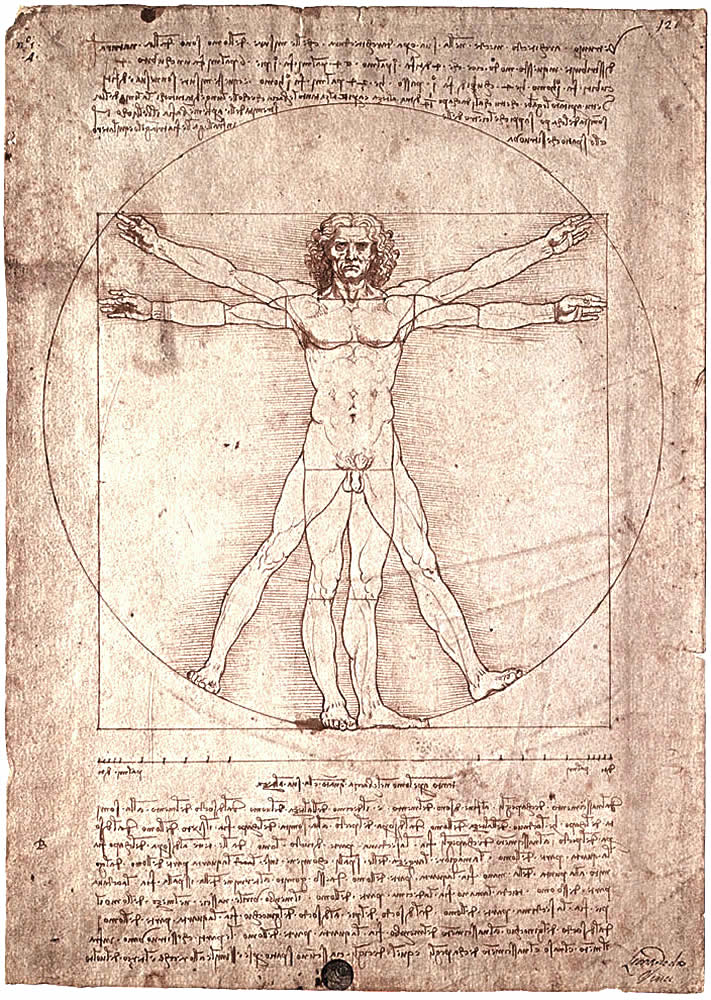


ANYWAYS, The Vitruvian man is the most accurate depiction of man, with everything being of most accurate measurements. Fingers, arm length, leg length etc. I stated that if no mutations had occurred in a human body, A person's Wing Span (Length from arm to the other) is equal to that person's height. And so, Mr. K measured me. Turns out, with my hair, and shoes, I seemed to be longer than my wing span. Subtract my hair and shoes, it would be just about right. He then talked about the symmetry of people and that if someones face or body was more symmetrical, the closer they would be to being "beautiful".


Pascal / Shijie Triangle Review
Concluding that, we reviewed 'Pascals' Triangle. Notice the quotations there. We first went over the patterns. Such as...

- when the binomial is expanded, A's exponent is decreasing, and B's exponent is increasing.
- the degree of any term, (a, ab, b) is equal to the term of the binomial.
ex.) (a + b)² = a²+ 2ab + b² <-- the exponent on the A and B terms of AB have a sum of two.


The yellow line is simply the counting numbers.
The green line in pascal's triangle are the triangular numbers.


- Triangular numbers are the sum of the counting numbers. 1 = 1, 2 = 3, 3 = 6 ...
- Justus, [in the previous class] found the tetrahedral numbers. (Follow the link to get a better definition etc)


- The powers of Two are embedded in each row. Example; 2° = 1 (Zeroth Row) 2¹ = 2 (First row) 1 + 1 = 2 ... and so on.
- The powers of Eleven [Word up to Elven] are also embedded in each row.


Now getting on with the Regularly Scheduled programming...


The Hockey Stick Pattern
He showed us new patterns within Zhu Shijie's Triangle. Such as the 'Hockey Stick' Pattern... How Canadian :) Basically, the hockey stick pattern is starting from any side (starting with one), go down diagonally, then cut back in the direction you came in and voila, the sum of those numbers are equal to the last number you cut into. Coincidence? I don't think so.


What the H, E, quadruple hockey sticks!?!?

Revealing The Fibonacci Pattern
Next, he showed us how to find the Fibonacci numbers within the triangle. In this slide, it is found by adding the numbers in a diagonal orientation.

He showed us that the 'Nacci sequence is found all around us, like in tree's and well, plants. For example. They're found in Pine Cones, Flowers, and their leaves. Bee's also respect the 'Nacci numbers when reproducing, as the male can only have one parent, and the female two, and from there you can pretty much depict how that goes down.


Phi - The Golden Ratio
He then started to divide each Fibonacci number by the number before that one. We found that the resulting number seemed to be reaching a certain number. He then introduced to us... Phi! "PHI is One H of a lot COOLER than Pi!!!" Get it? GET IT?! *crickets* Ok cool

So we have this here. If you want to look into it more, go to http://goldennumber.net/. I believe it's the 'Phinest' Source on Phi, or the Golden Sequence, or Golden Ratio, or ... You get where I'm goin'. So he did some stuff, like explaining that a 4 x 6 picture is better because it approaches Phi more than the 5 x 7 photographs. Apparently if you take pictures like the way he has set up in the slide above (at the black spots), you'll get a better looking, more attractive picture, if your object is concentrated at one of those points. This was where he started to tell us how to get 10 % more on the things we hand in... by making it approach Phi. So then he did all this stuff to 'Build' a golden ratio. So you...
  • Take a square, cut it in half
  • Make a semi-diagonal, in which you get a Pythagorean triangle...
  • and then I got lost after that.

He then went to the point where the golden ratio is 1 + √5 / 2 = 0. He then went on to explain Phi is everywhere, in the proportions of your body, (elbow to finger, wingspan, feet, height etc.) Everything is divided Long by Small to get Phi. So basically to get 10% of everything you hand in, hand it in so that it respect's Phi, and it'll look that more attractive... I think.

Basically, the more symmetrical you are, the closer you are to 'beautiful'. This is why a famous building in Athens (My bad, I couldn't recall what the building was called), is crumbling, but still looks appealing to people.

INTERMISSION


This Scribe post is sponsored by AVP
[No not Alien vs. Predator]
Binomial Solving
He went on an then introduced this...

So then we all screamed in terror (At least I did) as if Mr.K adopted the Dark Side due to this very long expression. But really it's the same thing we've been doing all along. nC2 = N! / (N-2)! 2! = N(N-1)/2! Which we find is one of the expressions within the algebraic expansion. So don't run away.

Remember, The number of terms is one more than the degree of the binomial. Mr. K then showed us the patterns.
  1. The coefficient of the 'ith' term is nC(i-1) ex.) for the 5th term, you'd choose 4
  2. The exponent on the "a-term" is given by: [n - (i - 1)]
  3. The exponent on the "b-term" is given by: (i - 1)
  4. The relation holds for each term in the expansion [exp a] + [exp b] = n
  5. The number of terms in any binomial expansion is: ( N + 1 )

Remember, There's always one more term than the degree of the binomial.


THE SECOND CLASS

Then we started to do some Binomial Solving. Mr.K asked us to find the 4th term in the expansion of (2 + x) ^7

To make this easier, we changed it into the (a + b) format we were using earlier. So we let a = 2 and b = x. We then have it as (a + b) ^7

So to find the 4th term we set it up as so;

t4 = 7C3 a^4 b^3

B's exponent is 3 because of (i - 1), 4 -1 in this case.

A's exponent is 4 because of [n - (i - 1) ], [7 - 3] in this case.

So then we came down with 7! / 4!3! (2)^4(x) ³ <-- We put back in the variables.

Then we came down with 35 (16) (x³) = 560x³

We then did about two more of them, but what I found really cool about how he did one of them is how he multiplied 56 an -8.

Basically he broke up 56 into 50 and 6. He then showed the concept of basically doubling those three times (2 cubed).

So first he doubled 50 and 6 --> 50 * 2 = 100 6 * 2 = 12
... then he doubled it again --> 100 * 2 = 200 12 * 2 = 24
... then he doubled it again --> 200 * 2 = 400 24 * 2 = 48
then he added them together --> 400 + 48 = 448.
And because the 8 was negative... --> -448.


So try it on your calculators... 56 * -8 = ... - 448!


Yeah I know, crazy.


Ok, lets try to wrap this up quick. I'm just showing this slide, as it's many student's mistakes to multiply the -1 by 3, but really, you're just cubing it... which still makes it -1 :)

Here, we discussed finding a certain term within an expansion.

First we did it a long and tedious way ( I didn't put up the slide for it), and once we found the pattern, which is the exponent changing by the same difference, we can then find the term we are looking for. But Mr. K showed us a more elegant way.

First, we wrote out the way we'd choose a number from an amount. And we'd use dummy variables so that we can just get the structure up.

So we set it up like ; qCp a^p b^q

This is where our *Remember* segment comes in.

REMEMBER, the exponent's sum must match the degree of the Binomial! So take a quick look above in the slide and we notice the exponent of the Binomial is 9, therefore, p + q MUST, and I mean MUST equal 9. Now let's put back in the variables so we can solve this little sucker.

(x^3) ^p (-x^-1) ^q So since we put back in the variables, the exponents now are 3p and -q. So then because we're looking for x^7, we set it up like;

3p - q = 7. well at least it should equal 7, because that's how we built it.

Then create a system of equations. p+q + 3p - q = 9+7 --> 4p = 16. Therefore, p = 4 and since p = 4, and the exponents MUST equal 9...

9 - 4 = 5. Therefore q = 5.

Now we can find that term.

9C5 (x^3)(-x^-1)^5 = x^7

= 126x^7

Class, this concludes today's lesson and work.

REMEMBER!

The sum of the exponents on any term MUST equal the degree of the Binomial!

Don't mistake exponents and multiply the coefficient. It must be raised to that exponent.

Don't forget about the Zeroth term!

And finally... A LOGARITHM IS AN EXPONENT! ... Just in case you forgot.

A side note;

Watch Iron Man. It's Dope. ... or should I say Phi? Oh yeah before I forget. The Next Scribe is ZEPH.


Now then, I gotta get some sleep and stay PHI! 8)


Rence ~ Out

Today's Slides: May 5

Here they are ...


Friday, May 2, 2008

Pascal's Triangle That Wasn't Really Pascal's Triangle...

Hi everybody...Benofschool here to scribe what we did today in class. Today Mr. K promised us that today's class will show a way that G-D built the universe and that it will blow our minds. But we didn't have enough time so we didn't get to G-D building the universe but the lesson did blow our minds.

Lets start with the first slide. The first slide had a picture of an ancient Chinese diagram. Hey doesn't it look a bit like Pascal's Triangle? Well it was Zhu Shijie's triangle created 400 years before Pascal.
When I asked my grandfather what the characters meant but unfortunately he said he couldn't understand it. The characters were of the ancient Chinese characters. The Chinese language has evolved a lot. But my grandpa and I found a connection of why the number 7 (fourth character from the left) was there. It probably had to do with how many rows the triangle had but there seems to be something different about the first 4 rows because the last row on the triangle says something about the number 7.

After a little conversation about that triangle and teaching Mr.K some Chinese pronunciation lessons we continued onto the next slide. He asked us to expand and simplify the binomials. It was a bit tedious but we did it. Since some of them were a bit long he enlarged the hidden answers like he always does (that sneaky guy...). It looks like any other expansions we've done but there was something special about them. So let's look at the next slide. It may give us some insight into what was so special about those binomials.

On the next slide...
we were asked to find the next two rows from what was shown. It was pretty easy to see. To find the next row just add the numbers on the previous row to obtain the next row for example: since there are no numbers before the 1st 1 and after the last 1 we can assume there is a zero there so 0 + 1= 1 so the next row starts with a 1. The next number can be obtained by adding 1 and 4 to get 5 on the next row. 4 + 6 to get 10 to get the next number, and so on until we get to
1+ 0=1 that ends the row.

So if we look at the numbers in each row and compare them to the coefficients of the simplified binomials on the last slide, they are the same. Lets look at (a+b)³: we get that the coefficients are 1,3,3,1 just like on the 4th row of the triangle. But wait that's not all of the patterns found on the binomial work. If we look at the exponents of the variables a and b. The coefficients of a decreases counting from the exponent on the original binomial until the exponents is zero. The coefficients of b are increasing until we get to the exponent on the original binomial. We were all commenting on how much more easier that would be to expand those binomials if we knew that patter so we went on to finding (a+b)^6.

Then on the 4th slide...

we were asked to evaluate the following. So to do that all we need to do is to plug it into our
TI-Calcumulators or just plug it into the Choose or Combination formula seen on the picture to evaluate it and it seems the numbers were the same on the triangle. Cool huh? Pascal originally "made" the triangle to help a friend gamble. Gambling is bad...

The next few slides we were just looking for more patterns on "Pascals" Triangle. We found the counting numbers (in yellow). On the other slide we found the powers of 2 on the triangle. If we find the sum of the numbers on each row we get a power of two. Cool. And the digits of the power of 11 is found on it too but a few rows down there is a problem... or is there? Since the 10 is on the 6th row we carry that one to the 10 on the left which makes it 11 and then we carry that 1 to the 5 to the left and we get six so 11^5 is 161051. Those slides totally blew our minds...

Okay for some Pascallian/ Zhu Shijie vocabulary...
Rows- The row of numbers: First Row, Second Row
Terms- The terms are the numbers on each row: First Term, Second Term
That vocabulary only works in high school. In University the first row is referred to as the zeroth row and the first term is referred to as the zeroth term. So if we combine the high school vocabulary the 5th term on the 3rd row is the number 6.

A little challenge for tonight is to find the Fibonacci Sequence (1,1,2,3,5,8...) on the triangle. And homework I thought will be posted on the blog but there doesn't seem to be any homework. I guess homework should be exercise the next like Mr.K always says and get practice on the unit because the pretest is on Wednesday and the test is on Thursday. So get those BOB's posted. Monday will be the day that Mr.K will show a way that G-D built the universe.

I just proved to my parents that the male seahorses give birth. The next scribe will be Rence. Until next class good bye and good night....